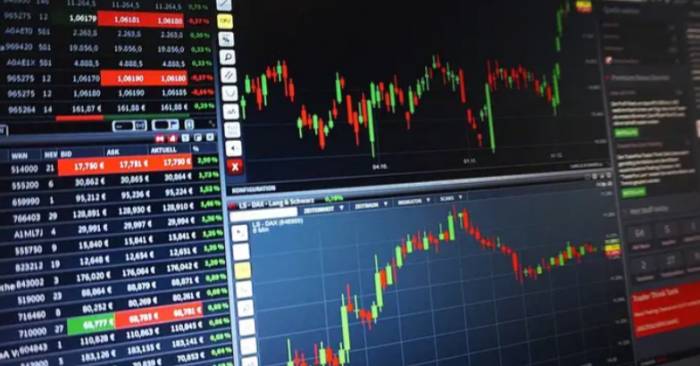
Let's cut through the hype. Quantitative option trading isn't about magic algorithms that print money while you sleep. It's a disciplined, often unglamorous process of finding small, statistical edges and executing them systematically, thousands of times. I've seen too many brilliant backtests crumble in live trading because they ignored market microstructure or overestimated their capacity. This guide is for the trader who's tired of discretionary guesswork and wants to understand what building a real quantitative edge in options actually entails.
What You'll Learn Inside
How Quantitative Option Strategies Actually Work
At its heart, a quantitative options strategy is a rules-based system that removes emotion. It answers three questions with data: What to trade? When to trade it? How much to trade? The "quant" part comes from using mathematical models, historical data analysis (backtesting), and statistical inference to generate those rules.
Think of it like a weather forecast for market behavior, specifically for factors that drive option prices—volatility, correlation, time decay. Instead of looking at a chart and thinking "IV looks low," a quant system might calculate that the current 30-day implied volatility is at the 10th percentile compared to the last 5 years of realized volatility, triggering a long volatility signal.
The Core Inputs: Your system feeds on data. This isn't just price data. You need options chains (bid/ask, implied volatility for multiple strikes and expiries), historical realized volatility, volume, open interest, and possibly broader market data like index levels or VIX futures. Sourcing clean, timestamp-aligned data is the first major hurdle.
Core Quantitative Option Strategies You Can Model
These aren't just ideas; they are frameworks that require specific modeling. Here’s a breakdown of the major categories.
1. Volatility Arbitrage & Forecasting
This is the classic quant options playground. The premise is simple: implied volatility (IV, what the market prices in) and realized volatility (RV, what actually happens) often diverge. The goal is to forecast RV better than the market's IV.
A具体 Setup: Your model predicts the 20-day realized volatility for SPY will be 18%. The current at-the-money IV for options expiring in 20 days is 15%. The system signals to buy straddles (a bet on higher volatility). The key is your forecasting model—it could use GARCH models, machine learning on order flow, or sentiment analysis from news. The CME Group's Volatility Index data is often a benchmark for such models.
2. Statistical Arbitrage with Options
Equity stat arb finds pairs of stocks that move together and trades the divergence. Adding options supercharges this by allowing you to bet on the convergence with defined risk.
Here’s how a simple version works:
You identify Stock A and Stock B in the same sector (e.g., two big banks) with a historically stable price ratio. Your model detects the ratio has moved 2 standard deviations from its mean.
The Discretionary Mistake: Buying Stock A and shorting Stock B.
The Quant Options Play: Selling an out-of-the-money put spread on the relatively weak stock (B) and buying an out-of-the-money call spread on the stronger stock (A). You're not betting the ratio snaps back perfectly, just that it moves back enough for your spreads to profit. It defines your max loss upfront, a crucial risk management feature most pure stat arb lacks.
3. Delta-Neutral Directional Plays
You have a strong view on a stock's future price, but you want to isolate that view from other risks like overall market moves (beta) or changes in volatility. Quant models help construct the option combination that gives you pure exposure to your forecasted variable.
Example: Your AI model scrapes supply chain data and predicts Company XYZ will beat earnings by 8%. Instead of just buying shares, you build a position that is delta-neutral but has positive "gamma" and "vanna." This means if the stock jumps on earnings, your position profits from the move and from the associated increase in implied volatility (the "vol crush" around earnings can be modeled and exploited). Getting this Greeks exposure right requires serious modeling software.
| Strategy Type | What It's Betting On | Key Quantitative Model Needed | Common Execution |
|---|---|---|---|
| Volatility Arb | Implied Vol vs. Forecasted Realized Vol | Volatility Forecasting (GARCH, HAR) | Straddles, Strangles, Variance Swaps |
| Statistical Arb | Reversion of a spread or ratio | Cointegration Analysis, Correlation Modeling | Ratio Spreads, Custom Multi-Leg Combos |
| Skew Trading | Pricing differences between puts/calls | Stochastic Volatility Model (SABR, Heston) Calibration | Risk Reversals, Butterfly Spreads |
| Gamma Scalping | Realized volatility > implied volatility | Delta-Hedging Simulation, Transaction Cost Analysis | Long Straddle + Dynamic Delta Hedge |
The Nuts and Bolts of Building Your System
A strategy idea is 10% of the work. The system is the other 90%.
Backtesting: This is where most fail. You must backtest on out-of-sample data (data not used to develop the model). Your backtest must include every real-world friction: bid-ask spreads, commission, slippage. I once built a beautiful volatility arb strategy that showed 40% annual returns. When I added a conservative $0.05 per-contract slippage, it turned into a 5% loser. The market makers thank you for not checking that.
Execution Infrastructure: This is the bridge from signal to filled order. You need a reliable connection to your broker's API (like Interactive Brokers or a dedicated prime broker). Your code must manage order placement, confirmations, and error handling (what happens if the market gaps and your limit order doesn't fill?). Latency matters, even for slower statistical strategies.
Risk Management Loop: This is the most important module. It's not just "set a stop-loss." It's position sizing based on volatility, max capital allocation per strategy, daily loss limits, and automatic de-leveraging during high volatility periods. Your system should be able to shut itself down if something goes haywire.
The Brutal Truth About Backtests: A smooth, upward-sloping equity curve in your backtest is a red flag. It means you've almost certainly overfitted your model to past data (curve-fitting). Real strategies have drawdowns, periods of flat performance, and look messy. If it looks too good to be true, it is.
Common Pitfalls in Quant Option Trading (And How to Avoid Them)
Let's talk about the stuff that rarely makes it into the textbook.
Pitfall 1: Ignoring the "Volatility of Volatility." You model volatility well, but you don't model how wildly your volatility forecast can swing. Your long volatility position might be right in the long run, but a short-term spike in IV (which increases your margin requirement) can blow you out before you see a profit. Stress-test your portfolio for changes in the VIX, not just the underlying.
Pitfall 2: Underestimating Liquidity Drag. That iron condor you want to trade on a mid-cap stock? The bid-ask spread might be $1.00 on a $5.00 premium. You're giving up 20% immediately. Your model must filter for instruments with sufficient liquidity. A good rule of thumb is to only trade options where the average bid-ask spread is less than 10% of the option's mid-price.
Pitfall 3: The "Set and Forget" Illusion. No model works forever. Market regimes change. A correlation that held for a decade can break (see the S&P 500 and VIX, which maintained a strong negative correlation for years before occasionally decoupling). You need a separate meta-system that monitors your strategy's performance for signs of decay and alerts you to intervene.
Pitfall 4: Data Snooping Bias. You test 100 different parameter combinations for your mean-reversion strategy and pick the one that performed best. Congratulations, you've just guaranteed it will fail going forward. You must use rigorous walk-forward analysis or cross-validation techniques to avoid this.
Your Quant Trading Questions Answered
The journey into quantitative option trading is a marathon of meticulous research, rigorous testing, and humble acceptance of market randomness. The goal isn't to be right every time, but to be systematically profitable over hundreds of trades by managing risk better than the other side. Start small, test relentlessly, and respect the complexity of the instruments you're trading. The edge, if you find one, is often in the boring details everyone else overlooks.